
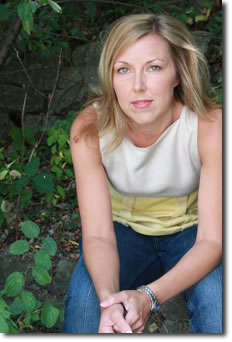
Born and raised in Rockford, Illinois, I majored in English and Russian at the University of Iowa, then worked and studied in Moscow, Prague, Krakow, and Madison, before moving to Ann Arbor, Michigan. There, I received an MA in Slavic Literature and an MFA in Creative Writing from the University of Michigan, where I taught for several years. In 2006 I moved to Milwaukee and taught for two years as the Writer in Residence at Carthage College before joining the faculty at the University of Wisconsin - Milwaukee, where I teach in the Creative Writing program.
My work has appeared in such places as Ploughshares, The Missouri Review, Alaska Quarterly Review, The Writer, and The Chicago Tribune. My honors include a Pushcart Prize, two Hopwood Awards, a Missouri Review Editors' Prize, and an honorable mention in the Best American Short Stories.
Q&A with Peggy Adler in Fiction Writers Review
Radio Interview with Mitch Teich on WUWM's Lake Effect

Stories emerge when people make mistakes, when they make bad choices or get tangled up in somebody else’s bad choice. The drunk who sideswipes you in a parking lot goes home (or to jail) with a story to tell, and he gives one to you too. Go about your business doing everything right, surrounded by others who do everything right, and you’ll go home happy but without too much to tell.
In the winter of 1996, I made one hell of a mistake. I fell in love with a terrible old house, a dump by any sane person’s standards, and I talked my innocent husband into buying it. We had foolishly watched too many episodes of This Old House, and I convinced myself that really, it wouldn’t be too hard to work, go to grad school, and in our free time completely gut and remodel this place with our bare hands. My husband, who had worked as a carpenter in the past, knew better.
What he didn’t know, what neither of us knew, was that the home had once been the site of a homicide. This nugget of information didn’t make its way to us until two weeks after we’d moved in. A neighbor came over to ask if he could put his old couch on the giant pile of garbage we were collecting at the foot of our driveway, and he mentioned the murder in passing, with a devious glint in his eyes.
When we asked him how and when the crime had occurred, he drew a total blank. To him it was casual neighborhood lore. For us it changed everything. Gap-jawed and wordless, we stood staring up at our dark, broken house, while our new neighbor scratched his head and waited, then drifted back across the street.
“He's not putting his couch on top of our garbage,” Rodney said.
When we worked up the courage to go back inside, our house’s many tragic flaws had taken on a new tone. The hideous mint-green paneling now seemed chosen not out of frugality or bad taste but to hide the huge splashes of blood we assumed were lurking everywhere. The missing floorboards must have been removed to avoid questions about bullet holes.
Most of all we scrutinized the previous owners. What kind of people could live in such a house?
As it turned out, we could. For eleven great years.
Four or five things made that possible. One: A few weeks later an older, nicer neighbor stopped by and told us a more complete account of the killing. Turns out, it was a domestic homicide, and though it was sad and wholly regrettable, the story she told was not one of random violence. It involved dignity and honor and the preservation of a struggling family.
Two: The seeds of that story took root in my imagination. Unable to erase my home’s awful past or undo my big bad decision to buy it, I did the only thing I could to try to resolve the story of the killing: I reinvented it. I wrote it down, starting with alter-egos of us, two dupes getting in over their heads with this house. Then I went back in time and imagined the circumstances that might lead a teenage boy to shoot someone under his own roof, then walk straight down to the corner store and surrender. I imagined this boy eighteen years later, grown up and hardened by a half-life in prison. Released on parole and lurking around the house, he watches with rising bitterness as these new owners strip the home of every piece of his family’s history.
Three: We never for a minute felt the house was haunted.
Four: Eventually we did restore the home as we had originally planned. And in some measure, writing this novel enabled me to face up to and live down the home’s past, and to reclaim those four walls for ourselves, for the neighborhood, and for any future residents. I couldn’t undo my big mistake, but I could use it, build on it, turn it into what all stories are: a gift for others.
Five: I had the great luck to sell the novel and see it published by HarperCollins. We managed to sell the house as well, and when I miss it now, as I often do, I open the book to find my record of it.